Load Securement Rules: How Many Tiedowns Do You Need?
Load Securement Rules: How Many Tiedowns Do You Need?
Cargo securement violations end more trips at the scale house than almost anything else on a truck. The rules are specific, checkable at roadside in minutes, and getting the tiedown count wrong puts the vehicle out of service on the spot.
The General Securement Rule
Under 49 CFR Part 393, Subpart I, cargo must be firmly immobilized or secured on or within the vehicle by structures of adequate strength, dunnage, dunnage bags, shoring bars, tiedowns or a combination of them. The rules are performance-based rather than prescriptive: a securement system must withstand 0.8 g deceleration in the forward direction plus 0.5 g acceleration rearward and 0.5 g acceleration laterally, applied separately. Secure your load in line with the general rules or an applicable commodity-specific rule and it is considered to meet those criteria.
Working Load Limits and the Half-Weight Rule
Every tiedown has a working load limit (WLL), and the aggregate WLL of the system must be at least half the weight of the article or group of articles. Count it this way: a tiedown running from an anchor point on the vehicle to an anchor on the cargo counts at half its WLL, while a tiedown that passes over or around the cargo and anchors to the opposite side of the vehicle counts in full. Chains are marked by grade — Grade 70 transport chain is rated around 6,600 lb at 3/8 inch — and unmarked welded chain is treated as Grade 30 proof coil, the lowest rating in the table.
How Many Tiedowns You Need
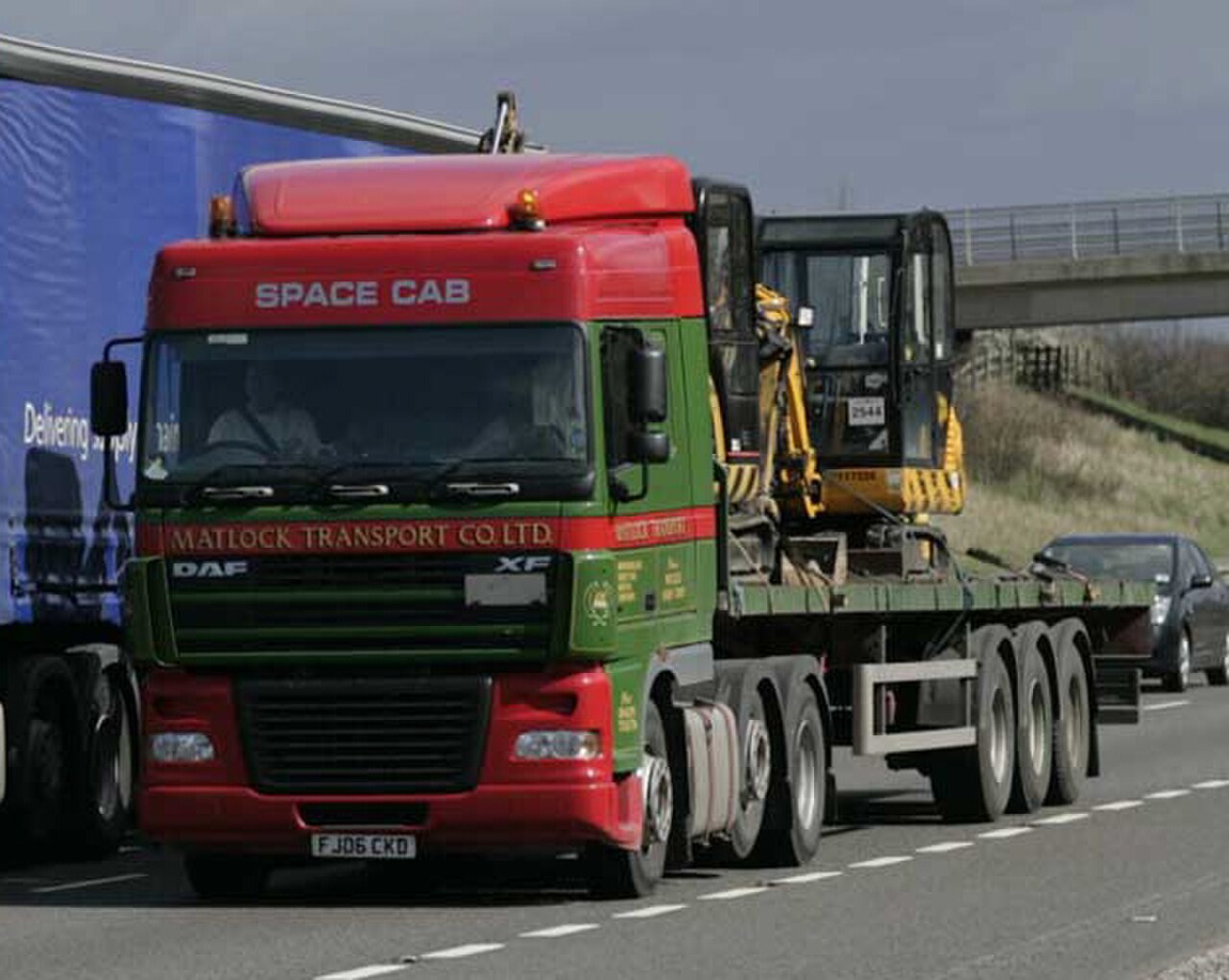
Minimum tiedown counts depend on length and weight whenever an article is not blocked against forward movement. One tiedown is enough for articles 5 ft or less in length and 1,100 lb or less in weight. Two tiedowns are required if the article is 5 ft or less but heavier than 1,100 lb, or longer than 5 ft but under 10 ft regardless of weight. Beyond 10 ft, use two tiedowns for the first 10 ft and one more for every additional 10 ft or fraction of that length. If the load is blocked, braced or immobilized against forward movement — a headerboard, bulkhead or another secured article — one tiedown per 10 ft or fraction is sufficient.
Condition, Placement and Edge Protection
Securement devices must be in proper working order, with no cracks, cuts or wear that reduce the working load limit, and the forces on them must never exceed that limit. Every tiedown must be attached so it cannot loosen, unfasten, open or release in transit. Edge protection is required wherever a tiedown could be cut or abraded by the cargo, and on trailers with rub rails tiedowns should sit inboard of the rails whenever practicable. Chocks, wedges or a cradle must restrain anything likely to roll, and that restraint must not be able to work loose on its own.
Commodity-Specific Rules Override the General Ones
FMCSA writes stricter, more prescriptive rules for the freight that triggers the most disputes at roadside: logs, dressed lumber, metal coils and paper rolls of 5,000 lb or more, concrete pipe, intermodal containers, flattened vehicles, roll-on/roll-off containers and large boulders over 11,000 lb. Vehicles and equipment split at 10,000 lb — lighter units follow the automobile rules, heavier machines follow the heavy equipment rules. Where a commodity-specific section applies, it takes precedence over the general requirements and spells out the securement method in detail.
Securement for Oversize and Heavy Haul
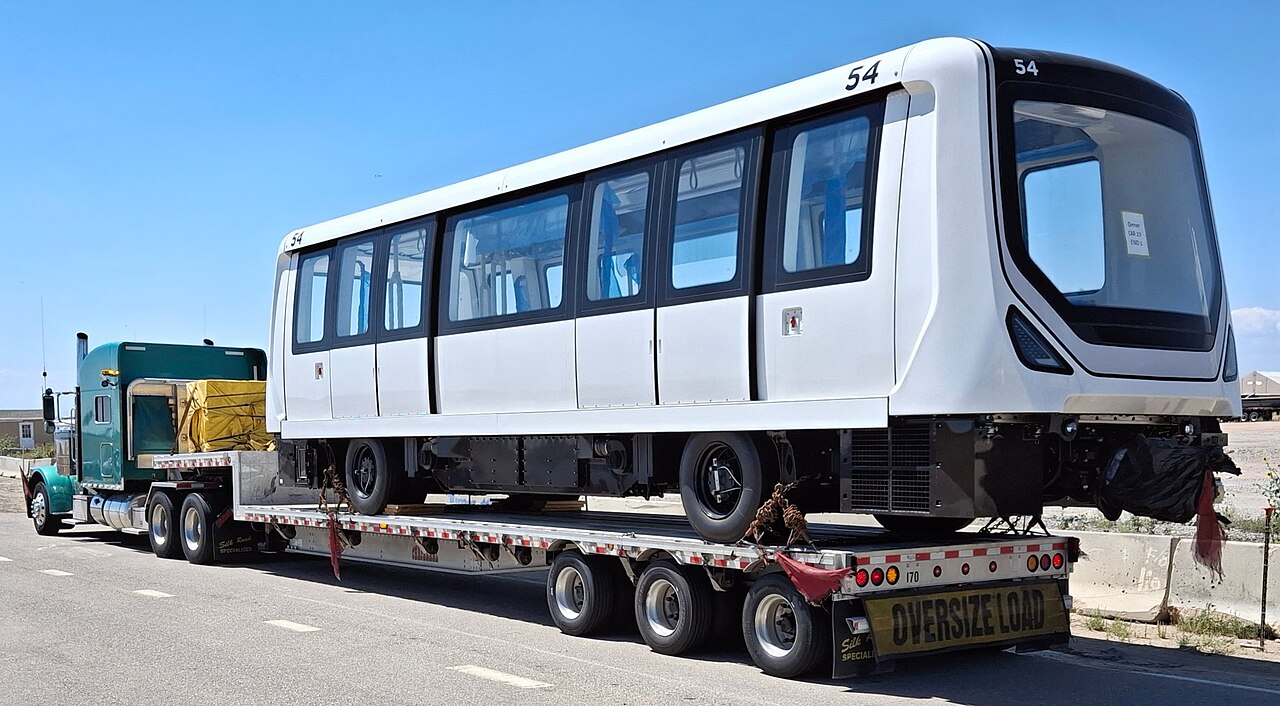
Heavy loads raise the stakes. Higher weights and a raised centre of gravity make lateral movement far more dangerous, so keep the load as low as possible and centred over the trailer. Articles placed beside each other must be in direct contact or prevented from shifting toward each other. Machinery on a lowboy needs blocking and dunnage under tyres and tracks plus chains anchored to rated points. If the load is oversize or overweight, the permit you are running under may add its own securement, signage and escort conditions.
Training, Inspections and the 50-Mile Re-Check
The driver is responsible for the load, and roadside inspectors check tiedown condition, count and placement, so a securement violation becomes an out-of-service order immediately. Train drivers on the specific commodities your fleet hauls rather than general principles alone, and build the habit: inspect at load-out, re-check after the first 50 miles, then again at every stop. Photograph the finished securement; if the load shifts, that timestamped photo is your evidence.
Getting Securement Right Every Load
Load securement comes down to three checks: the equipment is rated and undamaged, the tiedown count matches the length and weight rules, and the load cannot move forward, backward, sideways or roll. Run those checks before you leave, and again after the first fifty miles, and the scale house becomes a stop instead of a setback.
Leave a Reply