Escort Vehicle Requirements: When You Need a Pilot Car for an Oversize Load
Escort Vehicle Requirements: When You Need a Pilot Car for an Oversize Load
Most states will not let a wide, long, or tall load move down the highway unannounced. That is where the escort vehicle — often called a pilot car — comes in. Escorts warn traffic, check clearances, and shield the hauling truck from hazards the truck driver cannot see from the cab. If you haul oversize freight, knowing when an escort is required, what the operator must carry, and how the cost works will save you from a rejected permit application or a roadside shutdown.
What an Escort Vehicle Actually Does
An escort vehicle is a separate passenger car, van, or two-axle truck that travels ahead of or behind the permitted load and stays in radio contact with the truck driver. The operator watches the load’s clearance against bridges, trees, signs, and traffic, and warns the driver before a mistake becomes an accident. Escorts also block traffic at tight intersections, manage oncoming vehicles on narrow two-lane roads, and stop travelers from parking in the path of the load. In short, the escort is the driver’s extra pair of eyes at road level — something no amount of mirrors can replace on a 110-foot combination.
When Is an Escort Required?
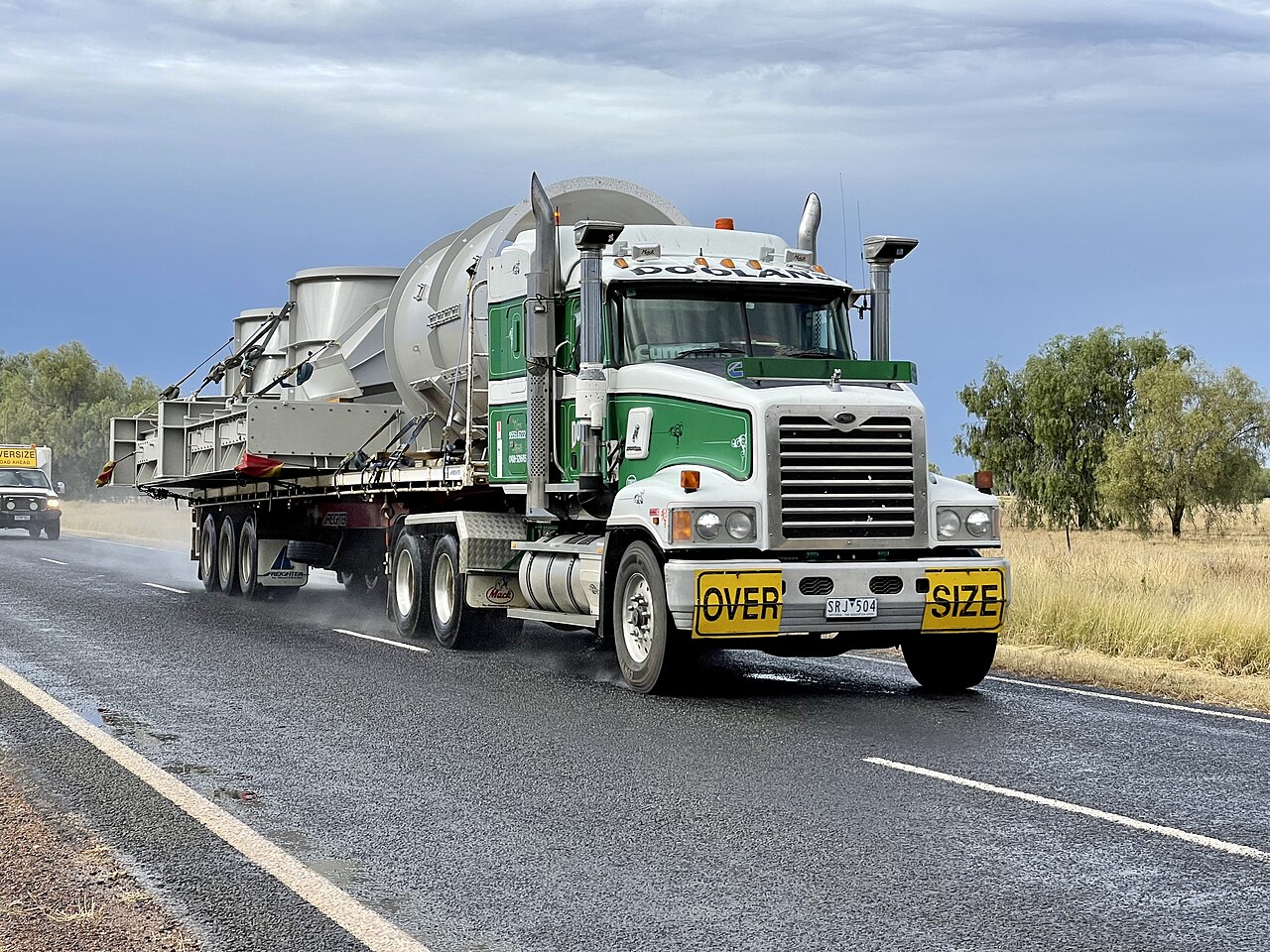
There is no single federal standard — escort triggers are set state by state, and they key off the load’s dimensions. Typical thresholds sit around 12 to 14 feet of width, 90 to 120 feet of total length, or 14’6″ of height. Washington’s rules are a good example of how specific states get: more than 11 feet wide on a two-lane highway requires two escorts, front and rear; more than 14 feet wide on a multilane highway requires one rear escort; a trailer over 105 feet requires a rear escort; and anything over 14’6″ tall requires a front escort with a height pole. Loads that overhang far past the axles also trigger escorts because the overhang swings wider than the trailer itself.
The number of escorts scales with the risk. A moderately wide load on a divided interstate might need one rear escort, while the same load crossing undivided two-lane farm roads can require front and rear escorts — plus, in some states, a police officer. Superloads that extend over the roadway centerline often add law enforcement to the mix. Because every state writes its own thresholds, always read the escort section of the permit itself rather than assuming last state’s rules carry over.
What the Escort Must Carry
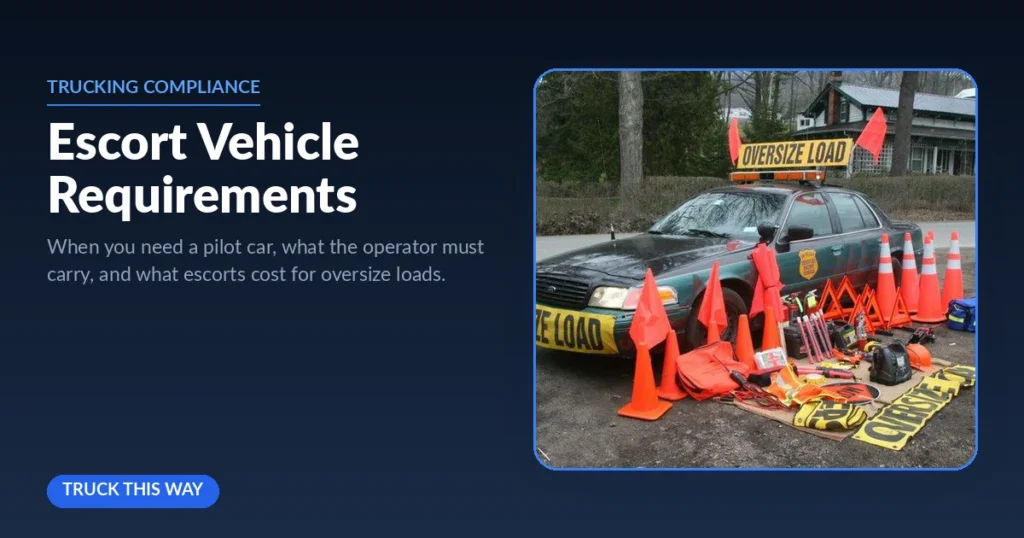
Escort equipment requirements are just as prescriptive as the trigger thresholds. A compliant pilot car typically needs a roof-mounted “OVERSIZE LOAD” sign with black lettering at least 8 inches high on a yellow background, flashing or rotating amber lights visible from 500 feet, and red or orange 18-inch flags. Operators also carry a standard 18-inch STOP/SLOW paddle, traffic cones, reflective triangles, a fire extinguisher, a first-aid kit, and — for tall loads — a height-measuring pole that extends above the load’s highest point. The vehicle itself usually has limits, too: Washington, for instance, caps escort vehicles at 16,000 pounds GVWR, requires a body width between 60 and 102 inches, and prohibits towing a trailer while escorting.
Certification and Insurance
Roughly half the states require the escort operator to hold a pilot car certification, typically earned through an 8-hour training course and renewed every few years — Washington renews every three years. Some states honor one another’s certificates: Minnesota accepts certifications from Colorado, Florida, North Carolina, Oklahoma, Utah, Virginia, and Washington, provided the operator meets Minnesota’s insurance and equipment rules. Insurance matters as well — escort operators are commonly required to carry liability coverage at or above the commercial minimums, and many states ask the hauling company to list the escort’s insurance on the permit application. When you hire a pilot car service, confirm the operator’s certification is valid in every state on the route.
How Much Escorts Cost
Escort pricing usually runs $75 to $200 per vehicle per hour with minimum call-out times, and multi-day superload moves add mileage, lodging, and per-diem. A routine move that needs one rear escort might add $500 to $1,000 to the job; a superload crossing several states with front, rear, and police escorts can add several thousand dollars. You can trim the bill: reduce dimensions where possible, pick routes that avoid undivided highways where double escorts trigger, and schedule moves that stay under the height threshold so the height-pole escort drops off. Route planning software helps here — mapping the exact path before you apply for permits tells you precisely which escorts each state will demand.
The Bottom Line
Escorts are not an optional line item — they are a legal condition of the permit, and states audit them from roadside checkpoints. Build the escort requirement into your quote, verify certifications and equipment before the truck rolls, and let route planning identify the cheapest legal path so you are not paying for a second escort you never needed.
Leave a Reply