Wind Turbine Blade Transport: How Oversize Blades Move by Truck
Wind Turbine Blade Transport: How Oversize Blades Move by Truck
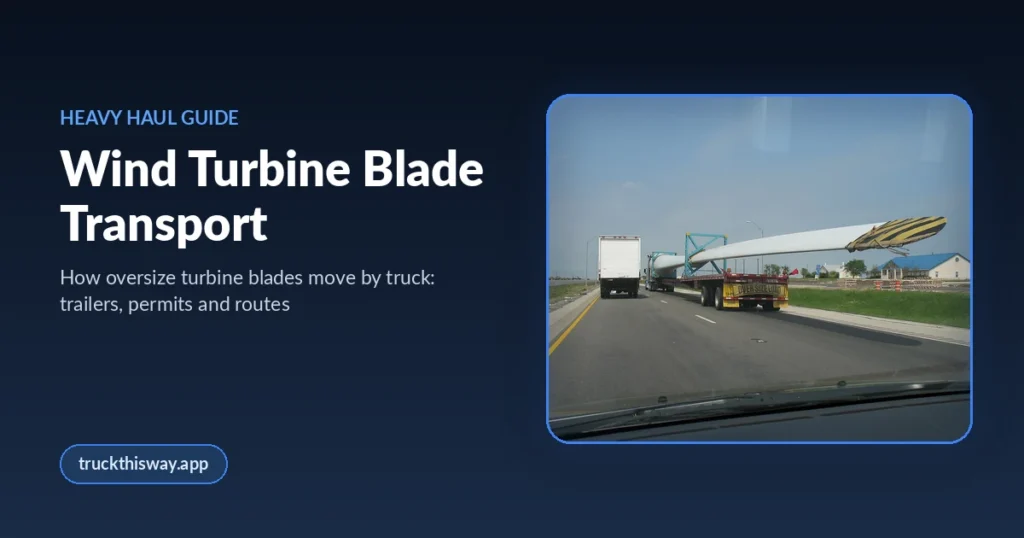
Few loads test a heavy hauler like a wind turbine blade. A utility-scale blade is taller than most buildings, light enough to need composite-friendly cradles, and so long that a hundred feet of it hangs behind the trailer. Delivering one turbine takes multiple rigs, and the blade move is usually the hardest.
Why Blade Length Drives Everything
According to Department of Energy data, the average newly installed land-based blade in the U.S. measured about 55 meters as of 2019. Current utility-scale products have moved well past that: Siemens Gamesa’s SG 5.0-145 uses a 71-meter blade, and Vestas markets a 73.7-meter blade on its V150 platform. The 67-meter figure has long been cited as the practical breakpoint where standard oversized-load logistics break down, and today’s blades sit above it. Length sets trailer configuration, escort plan, clearance survey and permit tier all at once. Offshore blades can be far longer — Siemens Gamesa has shipped 115-meter blades — but they travel by ship, which is why they never face a highway overpass.
The Equipment: Blade Lifters and Multi-Axle Rigs
The key tool is the blade-tilting trailer, also called a blade lifter. Systems from manufacturers such as Scheuerle, Goldhofer and Cometto use hydraulic mechanisms to raise a blade 60 to 65 degrees above horizontal, letting the load clear tree lines, signs and tight curves. Goldhofer’s FTV 930 is rated to 930 metric ton-meters of lifting torque; Cometto’s BladeMAX series covers 650 to 1,000 metric ton-meters. The blade rides in purpose-built cradles that clamp the root and midspan without crushing the composite skin, on extendable multi-axle trailers with rear-steer dollies that track around corners. A full turbine delivery is several loads: one rig per blade, plus separate moves for towers, nacelles and hubs.

Permits: One Per State, No Federal Option
A blade at 70 meters is over legal length the moment it leaves the yard, and no federal oversize permit covers an interstate move. Every state crossed issues its own permit, with its own escort thresholds, curfews and route restrictions. Long blades land in the heaviest permit categories, which means route review rather than self-issue, and states that publish lead times for superheavy applications run them in weeks. Some require a route survey letter on board, and heavier configurations trigger structural review.
Route Surveys and the Clearance Math
Route selection starts with vertical clearance. FHWA standards require at least 4.9 meters (16 feet) on rural Interstate overpasses, and some urban routes allow only 4.3 meters (14 feet) — a margin a lifted blade can eat through quickly. A blade route survey covers every overpass height, turning-radius analysis at intersections and ramps, pavement load ratings for the multi-axle configuration, and width restrictions on the secondary roads leading into the wind farm. The last mile is usually the problem: narrow access roads, tight switchbacks and unimproved surfaces that no permit tier accounts for.
Escorts, Signage and Travel Windows
Expect pilot cars. Long, wide loads generally require at least one escort, with front and rear escorts once the load passes a state’s width or height thresholds, and the count is set on the permit. Signage follows the usual pattern: an “OVERSIZE LOAD” banner readable front and rear, and flags at the widest and longest points. Travel windows are the other constraint: many states restrict oversize movement to daylight hours and black out weekends and holidays. Lifted blades add a weather rule of their own — Iberdrola documents a 10 m/s maximum wind speed for transporting a blade in the raised position, and past that it must be lowered.
Scheduling: This Is Project Freight
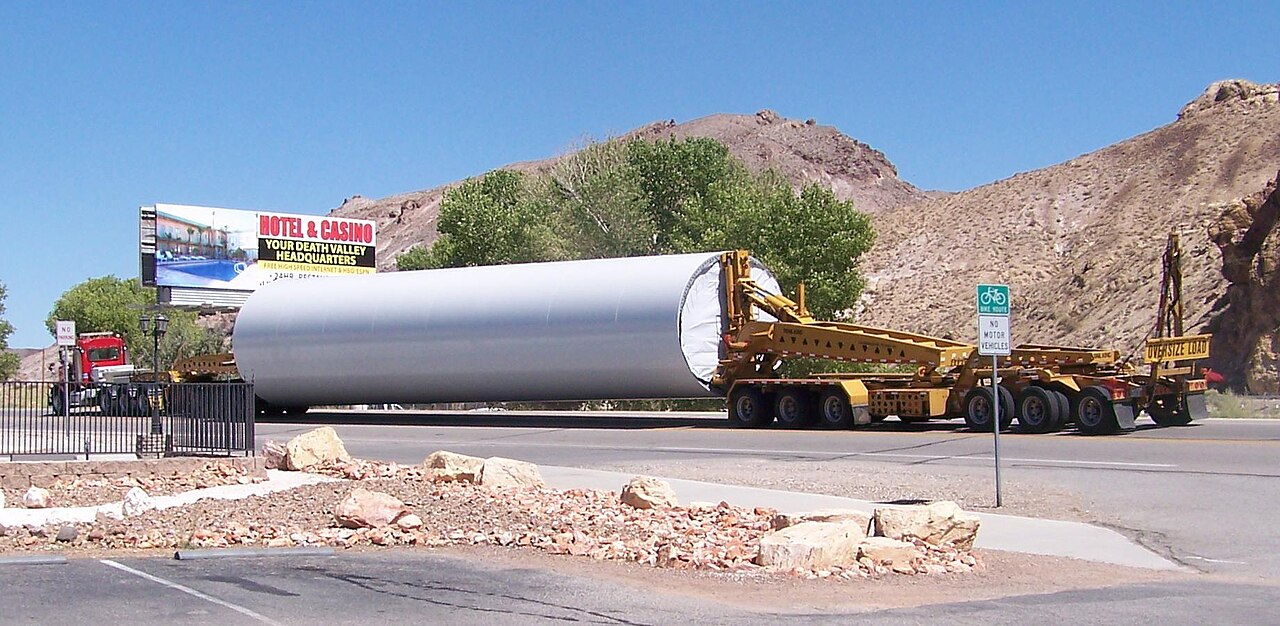
Blade transport is project freight, not spot freight. Blades must arrive in sequence with the crane schedule and installation crew, and a blown permit window, a wind hold or a route change can idle an entire site. Blade moves are therefore planned weeks ahead, with 3D route mapping, weather monitoring and backup corridors identified before the first load rolls.
Rail, Marine and Segmented Blades
Trucking is the primary method for onshore blades, but not the only one. Rail works as a mid-haul option when special cars are available, with a practical single-piece limit of roughly 75 meters under current infrastructure; NREL has modeled moving a 100-meter blade across four railcars using controlled flexing. Because wind farms sit far from rail lines, first- and last-mile truck moves happen either way. Segmentation is the other answer: GE Vernova commercially offers a two-piece jointed blade on its 3 MW platform, trading design complexity and site assembly for transportability. Nearly all onshore blades still travel in one piece, which keeps route engineering the highest-stakes decision.
What It Means for Heavy Haul Carriers
Blade work rewards carriers who plan routes as carefully as they maintain equipment. Establish the actual blade length first, match it to trailer capability, survey the whole corridor — overpasses, turns, pavement and the last mile — and file permits early enough to absorb review time. Do that and a load that looks impossible on paper becomes a routine, profitable run.
Leave a Reply