Semi Truck Tire Chains: Types, Rules, and How to Put Them On
Semi Truck Tire Chains: Types, Rules, and How to Put Them On
Snow season catches plenty of drivers off guard, and few moments sting like a chain law activation. Running without the right tire chains can cost you hours of delay, a citation, or worse — a stuck truck blocking the road. Chains are one piece of winter gear you cannot improvise, so the types, the rules, and the installation routine all matter before the first storm.
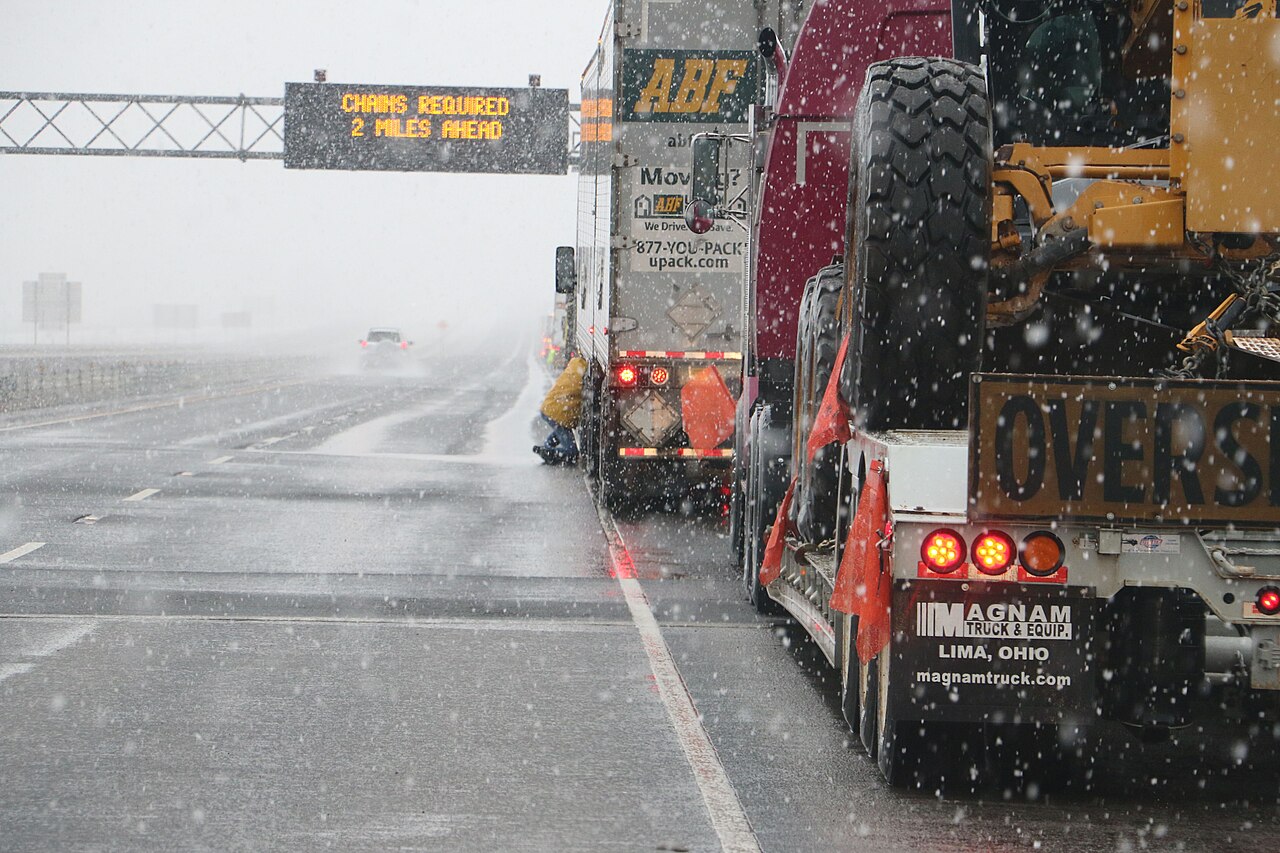
When Chain Laws Require Tire Chains
The pattern is similar across states: when roads turn bad, commercial vehicles must chain up. Colorado’s Must Carry law is a good example — from September 1 through May 31, vehicles with a GVWR or GCWR of 16,001 pounds or more must carry chains or approved alternate traction devices on designated mountain corridors including I-70 west of Morrison. When the law activates there, straight trucks and combinations must chain at least four drive wheel tires; buses and hot shots can satisfy it with two.
Fines scale quickly — Colorado charges $100 plus $32 for failing to carry chains, and up to $1,000 plus $156 if you get stuck blocking the roadway. See our guide to Colorado chain laws for the full state picture.
Ladder Chains vs Diamond Chains: What Regulators Accept
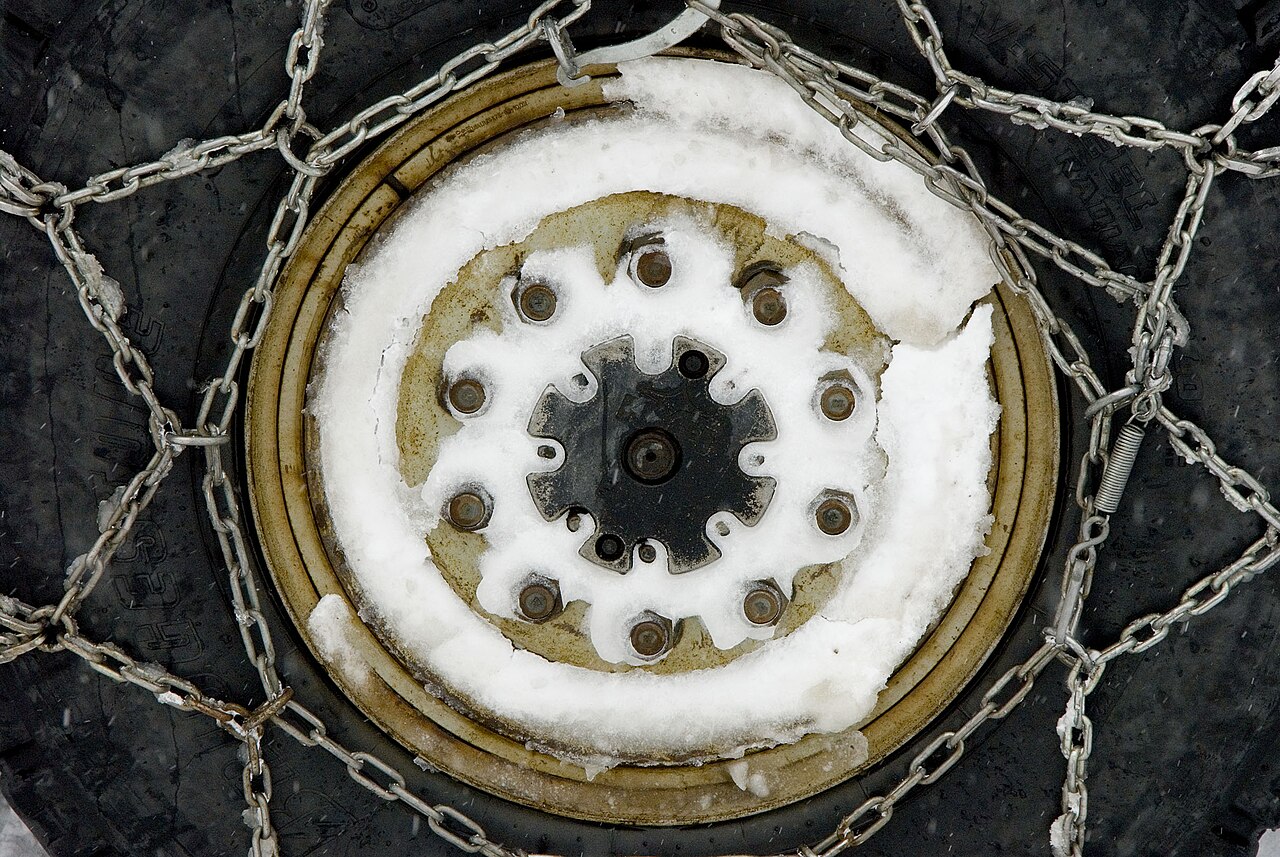
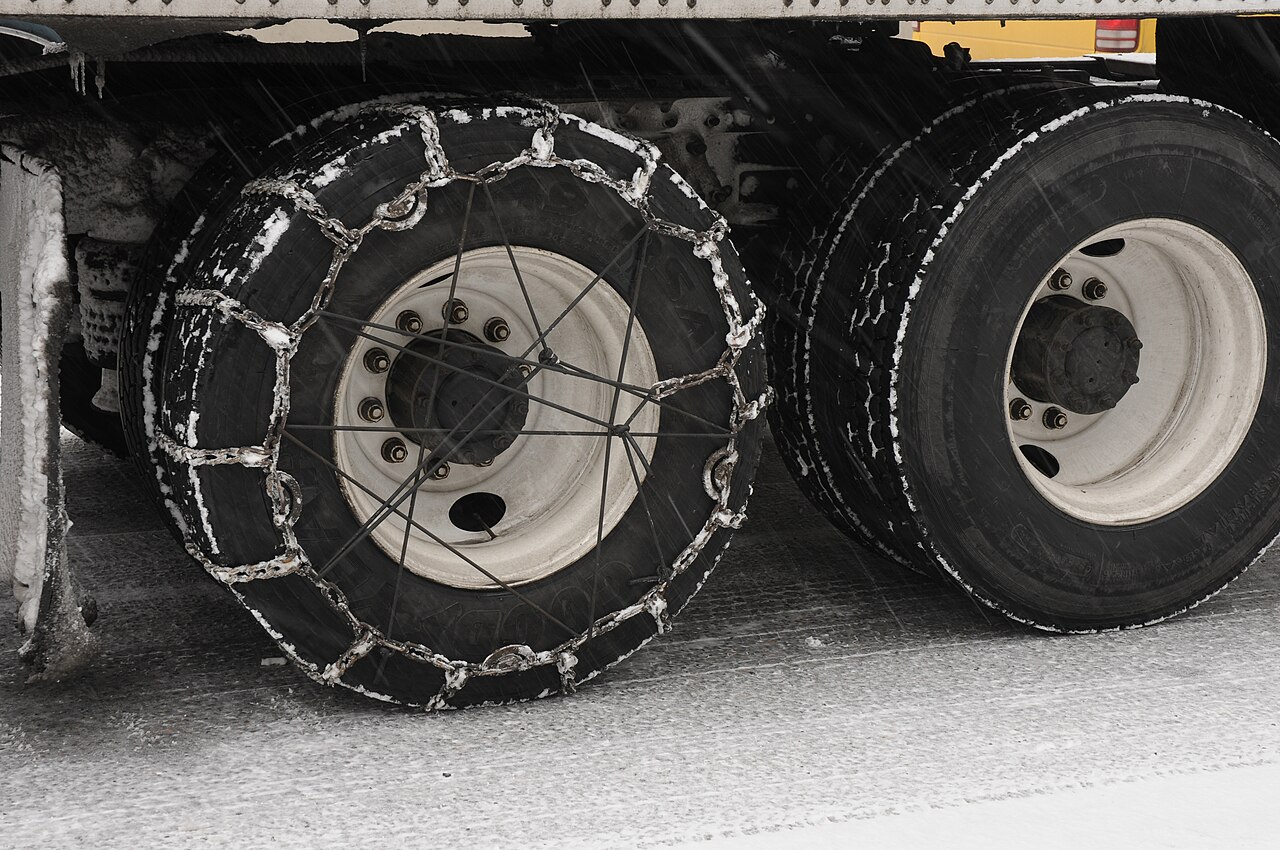
Not every “snow chain” for sale will satisfy a chain law — regulators define an acceptable set precisely. Colorado, for instance, accepts chains made of two circular hoops — one on each side of the tire — connected by at least nine evenly spaced cross chains across the tread, and the set must meet an SAE classification recognized by the National Association of Chain Manufacturers. Clip-ons and unapproved devices are not permitted.
For drivers, most legal sets fall into two patterns. Ladder-style chains use straight cross links evenly spaced across the tread — the most common and usually the cheapest. Diamond-pattern chains cross diagonally for a smoother ride and more contact points. Whatever you buy, match the chain size to your exact tire size — an 11R24.5 drive tire and a 295/75R22.5 do not share a chain part number.
Cable Chains, AutoSocks, and Other Alternatives
Steel cable chains use high-strength steel rollers across the tread instead of chain links. They are lighter, quieter, and easier to install, and Colorado allows them — with one catch: if chains are on the two outside tires of one drive axle, cables can cover the other drive axle’s tires. Rubber AutoSocks-style textile covers go on in minutes, but AutoSocks and cables cannot be used together.
Beyond those, states maintain approved product lists for alternate traction devices, and drive-wheel sanders or automatically deployed chain systems also count. Automatic on-board systems — a wheel frame that drops a spinning sprocket chain between the duals at the flip of a switch — cost more, but they eliminate the most dangerous part of compliance: throwing chains on the shoulder of a busy pass.
How to Put On Tire Chains, Step by Step
The sequence never changes. First, pull completely off the road at a legal chain-up station. Lay each chain flat on the ground across the drive tire, untangled, with the cam side facing out. Drape it over the tire so it hangs evenly, then tuck the trailing half under the tire as far as you can reach.
Roll the truck forward half a tire revolution so most of the chain sits ahead of the tire, then drive until the first cross chain is centered on the tread. Hook the inner connector on the inside tire wall and the outer fastener on the outside, then fasten the rubber tensioner or twist the cams tight — an untensioned chain will self-destruct within a quarter mile and can rip apart a fender or brake line. After a slow test roll, stop and re-check tension; the first few hundred revolutions stretch every chain.
Removing Chains and Avoiding Costly Mistakes
Take chains off as soon as the highway is bare — riding chains on dry pavement tears up the tread, the road, and the device, and most states suspend the chain law once the lanes are visibly clear. Shake off ice and snow, inspect for broken links, and let them dry before storage. Keep menders with the chains, because one broken cross link in a storm turns a legal truck into an illegal one.
Most chain-law mistakes are avoidable: buying generic chains without matching tire size, skipping the tensioner so chains scatter, and forgetting that hot shots and buses owe two chained drive tires while heavier combinations owe four.
Bottom Line
Tire chains are cheap insurance against the worst of winter — a couple hundred dollars a set versus a $1,000-plus fine at best. Know the thresholds before you haul, rehearse the installation once in good weather, and keep the chains within fast reach when the chain-up signs light up. And when you plan a winter oversize run, build it around chain laws and curfews — a route planner like Truck This Way routes around restrictions before the storm does it for you.
Leave a Reply