How to Find Safe Truck Parking: Overnight Strategies for Owner-Operators
How to Find Safe Truck Parking: Overnight Strategies for Owner-Operators
Your 14-hour clock does not care that the next 40 truck stops are full. The federal Jason’s Law survey found that 37 of the 51 state agencies it polled — 72.5 percent — reported a truck parking problem, and drivers on the most congested freight corridors routinely spend their last hour of drive time hunting for a space. Here is how owner-operators find safe overnight parking without burning their hours or their cargo.
Why Safe Parking Is So Hard to Find
Truck parking is a national capacity problem, not just a city problem. In the Jason’s Law survey, 30 states reported shortages in public rest areas and 16 reported shortages in private truck stops. When official spaces run out, trucks spill into unofficial ones: 24 states reported trucks parking on freeway interchange ramps and 23 reported trucks on freeway shoulders. Demand peaks overnight and in the early evening, exactly when the hours-of-service rules are pushing you off the road. Every month of the year shows the same squeeze, and winter makes it worse when snow buries spaces.
Plan Your Stop on the HOS Clock
Do not wait until the 14-hour wall is 30 minutes away to start looking for a spot. Work backward: decide where you will sleep before you leave the shipper, and stop there even if you still have drive time left. Parking demand rises through the evening and peaks around 10 p.m., so arriving by 7 or 8 p.m. at a major stop dramatically improves your odds. If you park on the edge of the shortage window, one filled lot can force you onto a shoulder — or into running illegal, which costs far more than an hour. The federal hours of service rules are fixed; your parking plan is the variable you control.
Park at the Delivery When You Can
One of the most underrated options in the federal survey: 36 percent of drivers said they felt safer parked at a shipper or receiver location than anywhere else. If you deliver in the evening, ask the guard or shipping office whether overnight parking is allowed — many plants welcome trucks that are first out at loading time, and that puts you at the dock when your appointment opens. Industrial yards are not hotels, so stay alert, but a live site with people around is usually safer than a dark lot in a bad part of town.
Use Apps and Reservations
Major chains now let you reserve a space in advance through their apps, which turns parking from a gamble into a line item — typically a few dollars on top of your stop. Truck stop loyalty apps show real-time space counts, and several state DOT sites and 511 systems list truck parking availability at public rest areas. Build the habit of checking availability at your planned stop around midday, while you still have hours to change destination if the counters are red. Reservation fees are cheap insurance against a parking ticket at 2 a.m.
Pick Lots With Real Security
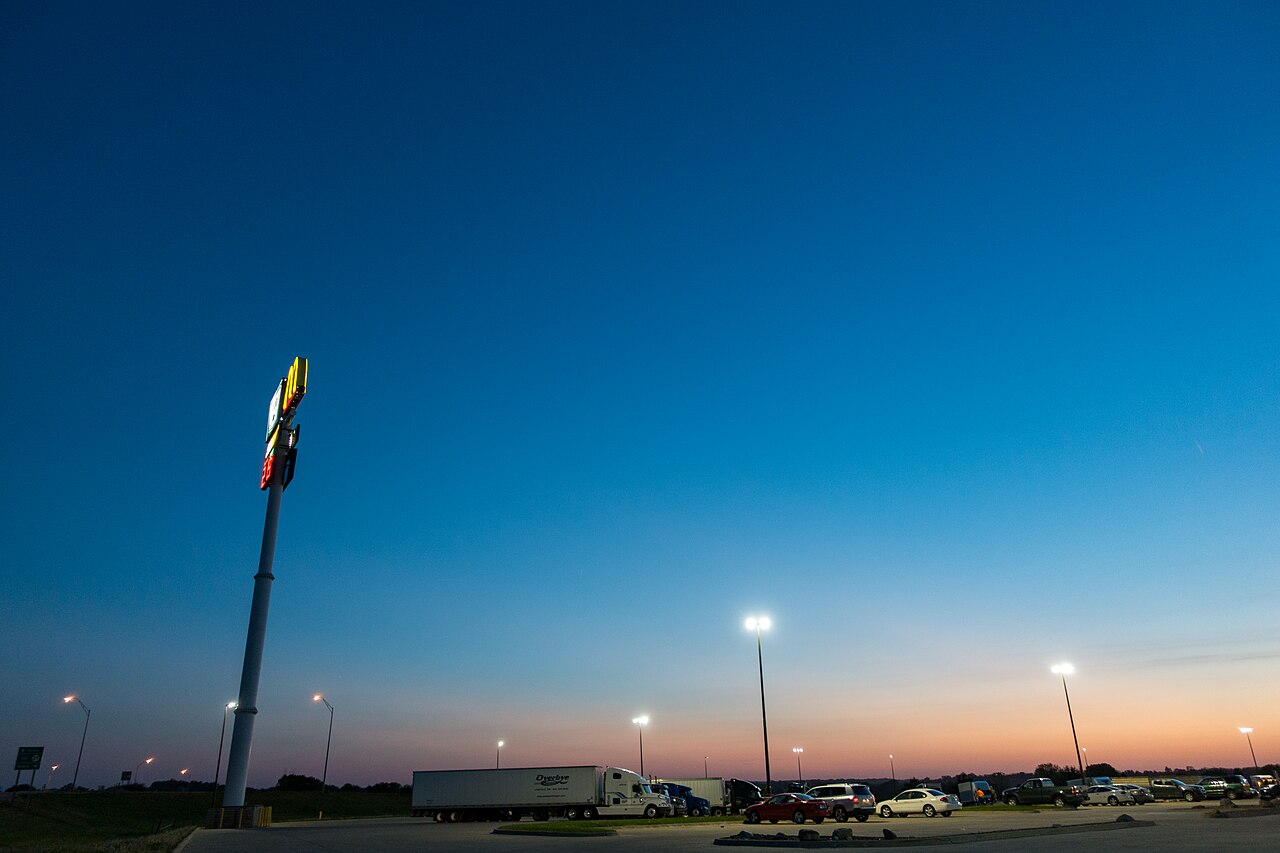
When choosing between lots, judge them on lighting, visibility, and company. High-mast lights are the first sign of a safer property; camera coverage and regular patrols are the second. Park with other trucks rather than in an empty corner, back in or nose out so you can leave without a 20-point turn at dawn, and keep valuables, paperwork, and anything visible out of sight — cargo theft crews case truck stops for unattended loads. A fenced, paid, secure yard is worth the fee whenever you are carrying high-value freight.
What to Avoid
Freeway ramps and shoulders are not parking spaces: they are illegal in most states, invite a citation, and put you in a position where a drowsy driver can drift into your trailer. Dark, isolated lots with no lighting are where thefts and break-ins happen. And never park where your unit blocks sight lines, fire lanes, or a shipping dock — some jurisdictions tow commercial vehicles first and ask questions later. If a lot feels wrong, burn the fuel and drive to the next lit option while you still have hours.
Safe parking comes down to planning, not luck: pick your overnight stop before you start the day, reserve when you can, and treat lighting and company as security features rather than luxuries. Pair that discipline with a route plan that keeps you legal on dimensions and permits — Truck This Way builds permit-aware routes for oversized loads so the only thing you worry about at 10 p.m. is dinner, not your parking spot.
Leave a Reply