Heavy Haul Trucking: What It Is and What It Takes to Haul Oversize Loads
Heavy Haul Trucking: What It Is and What It Takes to Haul Oversize Loads
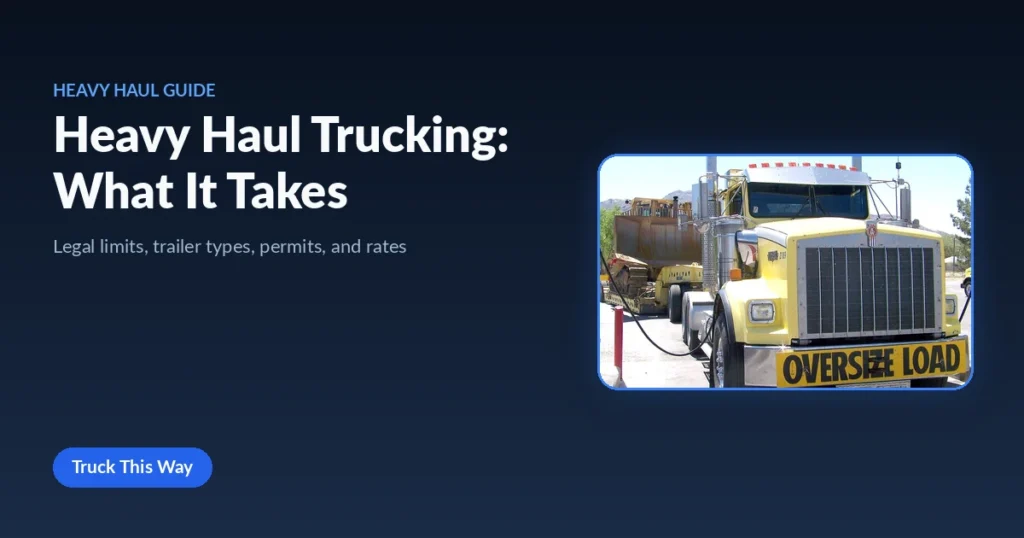
Heavy haul trucking moves loads too heavy, too tall, or too wide for a standard dry van. Equipment, permits, and routing all change once a load crosses a legal limit — and so does the pay.
What Counts as Heavy Haul Trucking
The clearest definition is a load that exceeds at least one federal or state size or weight limit. Standard commercial vehicles on the Interstate System are capped at 80,000 pounds gross vehicle weight under 23 CFR 658.17, with 20,000 pounds on any single axle and 34,000 on a tandem. A load inside those numbers, fitting a 102-inch width and clearing 13 feet 6 inches, is ordinary freight.
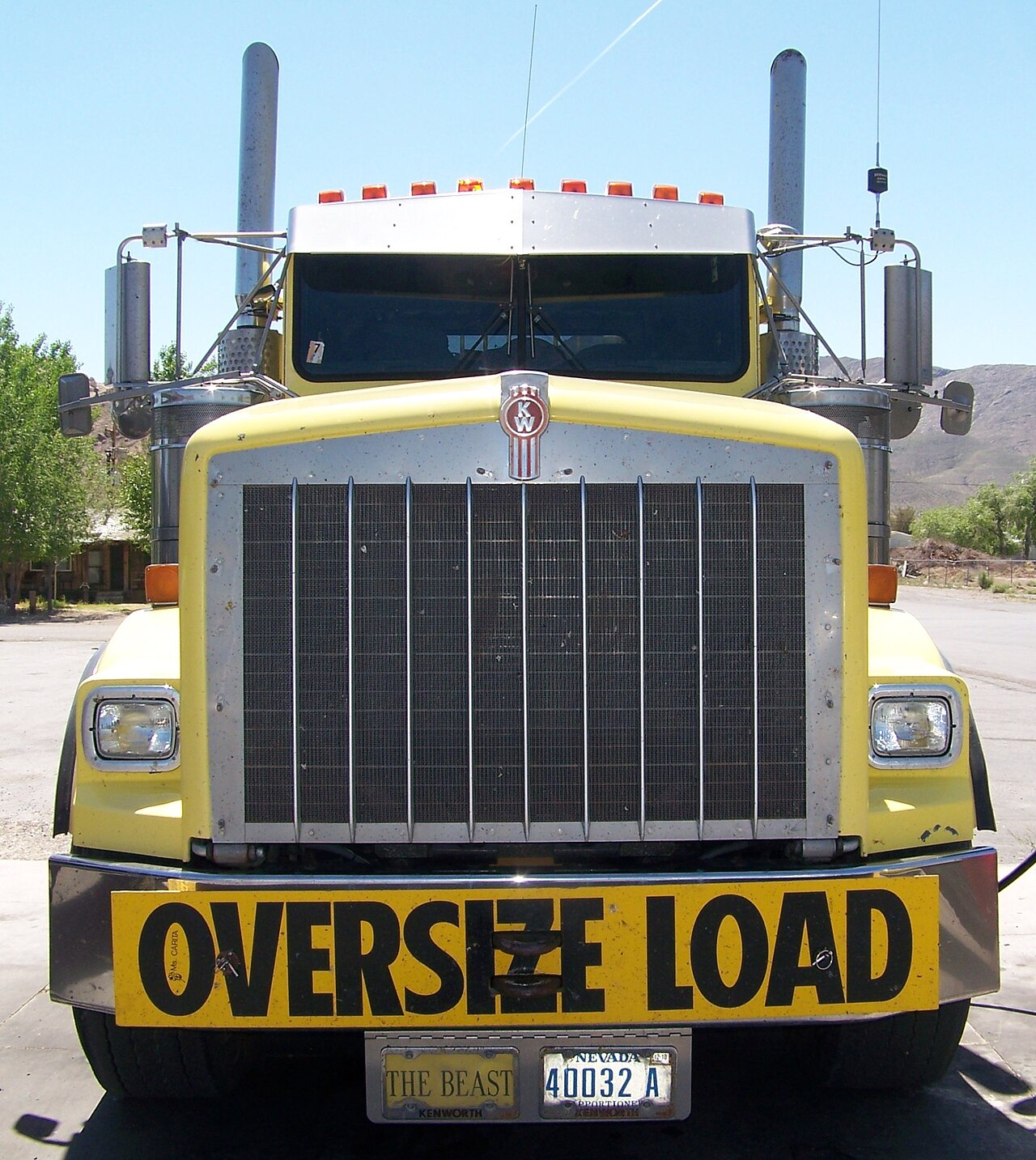
Cross any one of those lines and the move becomes heavy haul. A 90,000-pound excavator, a 12-foot-wide crane section, and a machine too tall for a flatbed all land in the same category, each with a different permit path.
The Legal Limits That Define a Heavy Haul
Weight is governed by overlapping tests. The gross limit is 80,000 pounds, but the Bridge Gross Weight Formula can force a lower gross depending on axle spacing. That is why a five-axle rig at 78,000 pounds can be legal while a shorter configuration at the same weight is not. Adding axles spreads the load.
Width and height work differently. The federal width limit is 102 inches and there is no federal height limit — most states set 13 feet 6 inches to 14 feet, with lower clearances on specific roads. States issue special permits for nondivisible loads exceeding the axle, gross, or bridge limits, which is the mechanism that makes heavy haul possible.
Trailer Types and What They Carry
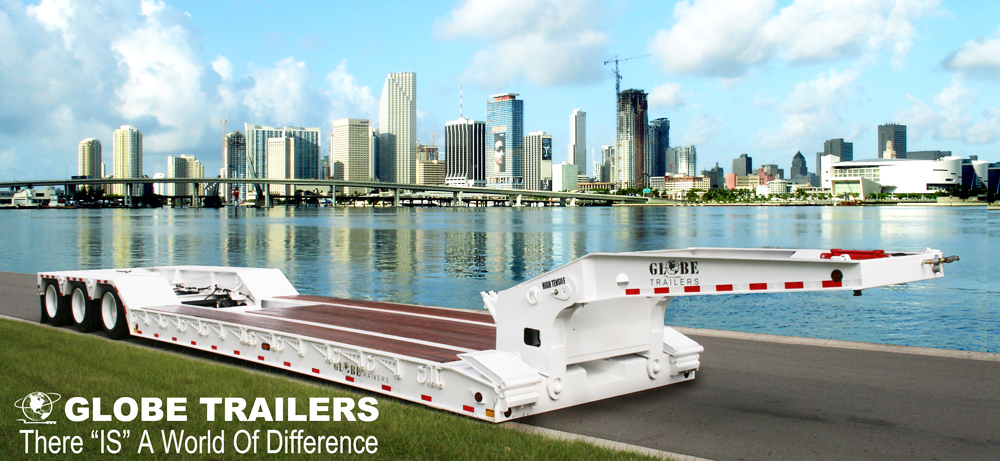
A standard lowboy deck sits 18 to 24 inches off the ground, versus 48 to 54 inches for a flatbed. That low deck keeps tall equipment under the height limit without a permit and lowers the center of gravity. Capacity scales with axles: two-axle lowboys carry roughly 40,000 pounds of payload, three-axle around 60,000, four-axle around 80,000, and five or more axles handle 80,000 to over 200,000 pounds for mining equipment and superloads.
A removable gooseneck, or RGN, detaches at the front so tracked machines drive straight on — the reason most dozer and excavator moves use one.
Permits, Escorts, and Route Planning
Every state on the route issues its own permit, and most require them before the truck moves. The permit names the approved route, the dimensions authorized, and often the travel window — many states restrict oversize movement at night, on weekends, or around holidays. Some corridors require pilot cars or police escorts based on width, length, or height.
Route planning decides whether a legal load actually fits. Bridge clearances, weight-restricted bridges, construction zones, and low wires can invalidate a route that looks fine on a map. The practical workflow is to pick the route first, then confirm every jurisdiction’s permit and escort threshold against the exact dimensions of the loaded unit.
Equipment and Power Requirements
Heavy haul tractors need more than horsepower. A typical spec includes a 500 to 600 horsepower high-torque engine, a multi-speed transmission with a deep low gear, heavy-duty rear axles, and a reinforced fifth wheel. Many operators run a jeep between tractor and trailer to add axles forward and a stinger or booster axle behind. Loads are chained and bindered to a working load limit well above what a strap rating suggests.
Getting Into Heavy Haul Trucking
Most carriers hire from within their own flatbed or step deck ranks. The usual path is a Class A CDL, a clean record, one to three years of verifiable experience, and comfort with securement and permit paperwork. Owner-operators wanting their own authority face the standard steps: USDOT number, operating authority, insurance, and a drug and alcohol program. Insurance is the hard part — heavy haul coverage costs well above standard van coverage, and some underwriters want a year of documented oversize experience before quoting.
Rates and How the Work Is Priced
Heavy haul is priced on dimensions and weight, not just miles. A quote accounts for trailer type, axle count, permit fees across every state on the route, escort costs, and loading time. Because capacity is limited and equipment is specialized, rates per mile run well above dry van. The tradeoff is utilization: a permit that takes three days to issue can strand a truck, so accurate quotes build idle time into the rate.
The Bottom Line
Heavy haul trucking is defined by legal limits, not by how big a load looks. Know the 80,000-pound gross, the axle and bridge formula tests, the 102-inch width and state height limits, and the permit path for each jurisdiction on the route. Get the trailer and axle configuration right, plan the route before quoting, and the rest is execution.
Leave a Reply